

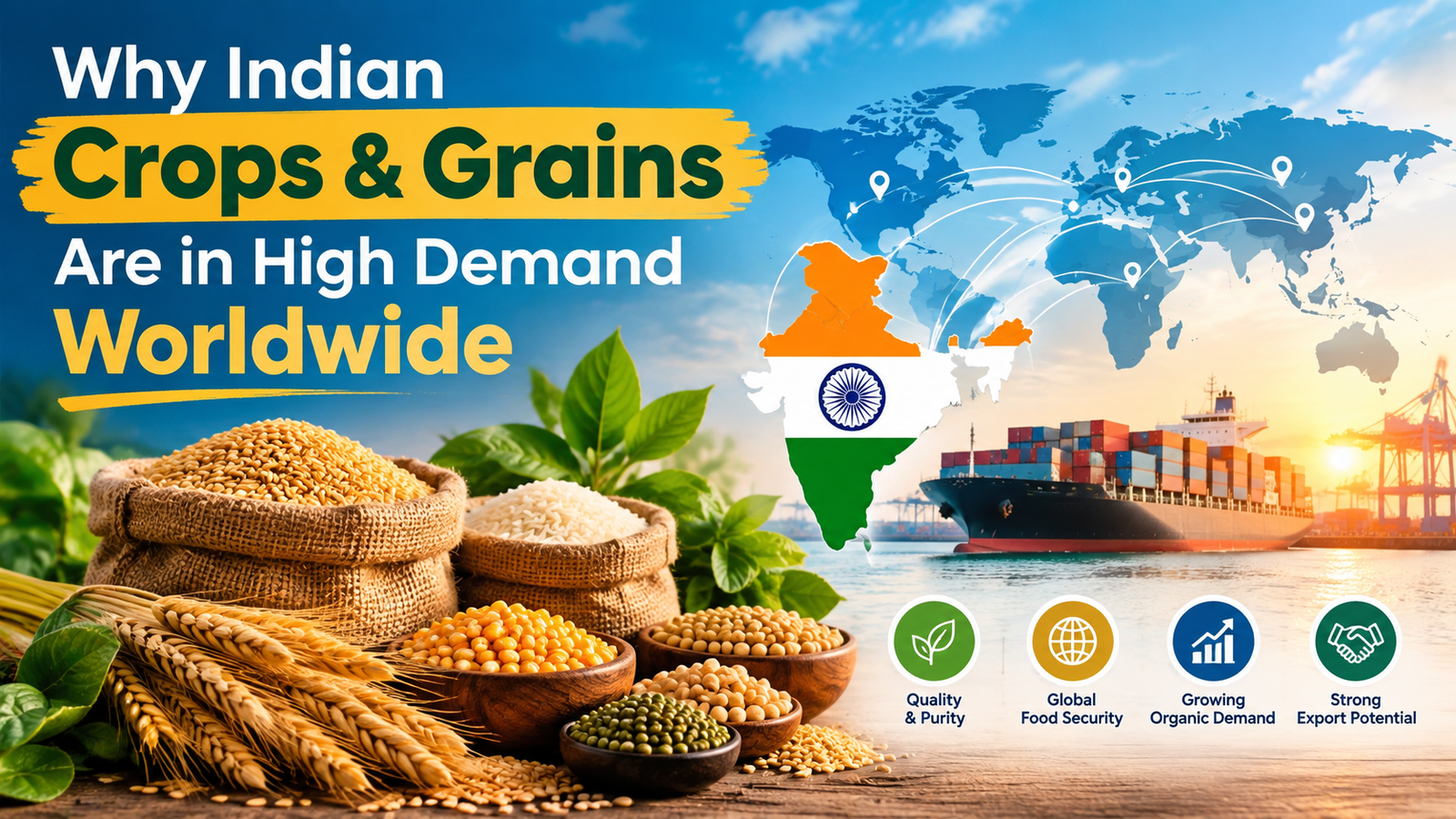
India has always been a bit too tied with agriculture, like, in a good way. From rice and wheat to pulses, maize millets, and spices, Indian farms can put out a wide mix of crops, for local use, and also for buyers outside the country. Right now, **Indian crops and grains** are getting a lot of attention from international importers, mainly for quality, variety, pricing that feels competitive, and supply that keeps showing up.
India’s agricultural export business has become a serious part of the wider global food trade. As per APEDA, India shipped agricultural goods worth roughly **US$51.91 billion in 2024–25**, and agricultural plus processed foods hit more than 200 countries and regions.
So what makes **Indian agricultural products** so well liked, worldwide?
1. Huge Variety of Crops and Grains
One of India’s biggest strengths is agricultural diversity. Because the climate changes across different parts of the country, farmers can grow different crops across the year, not just one season over and over.
Key **Indian grains for export** include rice, wheat, maize, barley, sorghum, bajra, and other millets. India is also known for producing pulses, spices, oilseeds, plus fruits and vegetables.
Because so many categories are available, it makes India a convenient sourcing place for foreign importers who want several agricultural items from one origin, instead of chasing too many suppliers.
2. Strong Global Demand for Indian Rice
Rice is basically one of India’s strongest export categories. Basmati rice stands out a lot, for its unique aroma, long grains, and cooking performance.
Even **non-Basmati rice** is still in demand internationally. APEDA notes that India stayed as the world’s largest rice producer by share in 2024 and continues to support major markets across Asia, the Middle East, Africa, and beyond.
That strong position makes **Indian rice exporters** an important node in the global rice supply chain, if you know what I mean.
3. Competitive Pricing
Cost matters a lot when international buyers are choosing agricultural suppliers. India’s big farming base, the farming ecosystem that has been there for years, and the supply reach helps exporters stay competitive on price.
For buyers searching for **grains suppliers in India**, or bulk agricultural commodities, the competitive pricing often becomes a real advantage, without forcing a drop in product variety.
4. Growing Demand for Millets and Healthy Grains
Globally, consumer tastes are shifting. More people are looking for nutritious food, natural options, and minimally processed diets.
Because of that, there are fresh openings for Indian millets like finger millet, pearl millet, sorghum, and other traditional grains. These are increasingly treated as a fit for health focused menus and niche specialty food spaces.
More interest in nutritious grains means more chances for **Indian grain exporters** entering international markets.
5. Strong Production Capacity
India has a large agricultural production base. In 2024–25, production of rice, wheat, maize, and nutri-cereals was reported at about 150.18 million tonnes, 117.95 million tonnes, 43.41 million tonnes, and 18.6 million tonnes respectively.
Those big volumes let exporters access plenty of material for both domestic trade, and international shipments.
6. Demand Beyond Traditional Markets
Indian agricultural products aren’t stuck in only a few old destinations anymore. Indian agri and food items are now supplied to places including the USA, UAE, Saudi Arabia, Iraq, Bangladesh, Vietnam, Malaysia, Indonesia, and multiple African countries too.
This wider spread of buyers creates chances for companies involved in **agricultural product export from India**.
The Future of Indian Crops and Grains
The global food market is slowly getting more varied, and buyers want dependable partners who can deliver quality products at competitive prices. India looks ready to benefit from this shift because of its crop diversity, production scale, established export structure, and increased focus on value-added foods.
For businesses trying to enter international trade, **Indian agricultural products for export** bring opportunities across rice, grains, pulses, millets, spices, fruits, vegetables, and processed foods.
Conclusion
The worldwide demand for Indian crops and grains is not only because India produces a lot. Quality plus variety, competitive pricing, traditional know-how, and access to different international markets all help India expand its role in global agriculture.
And as global food needs keep changing, **Indian agricultural exporters and suppliers** can reach new markets, and also build long term relationships with buyers around the world.
suggestion link
Call: +91 88264 00869
Website: Top Trade India
Email: info@toptradeindia.com



Comments (0)
No comments yet. Be the first to comment!
Leave a Comment