

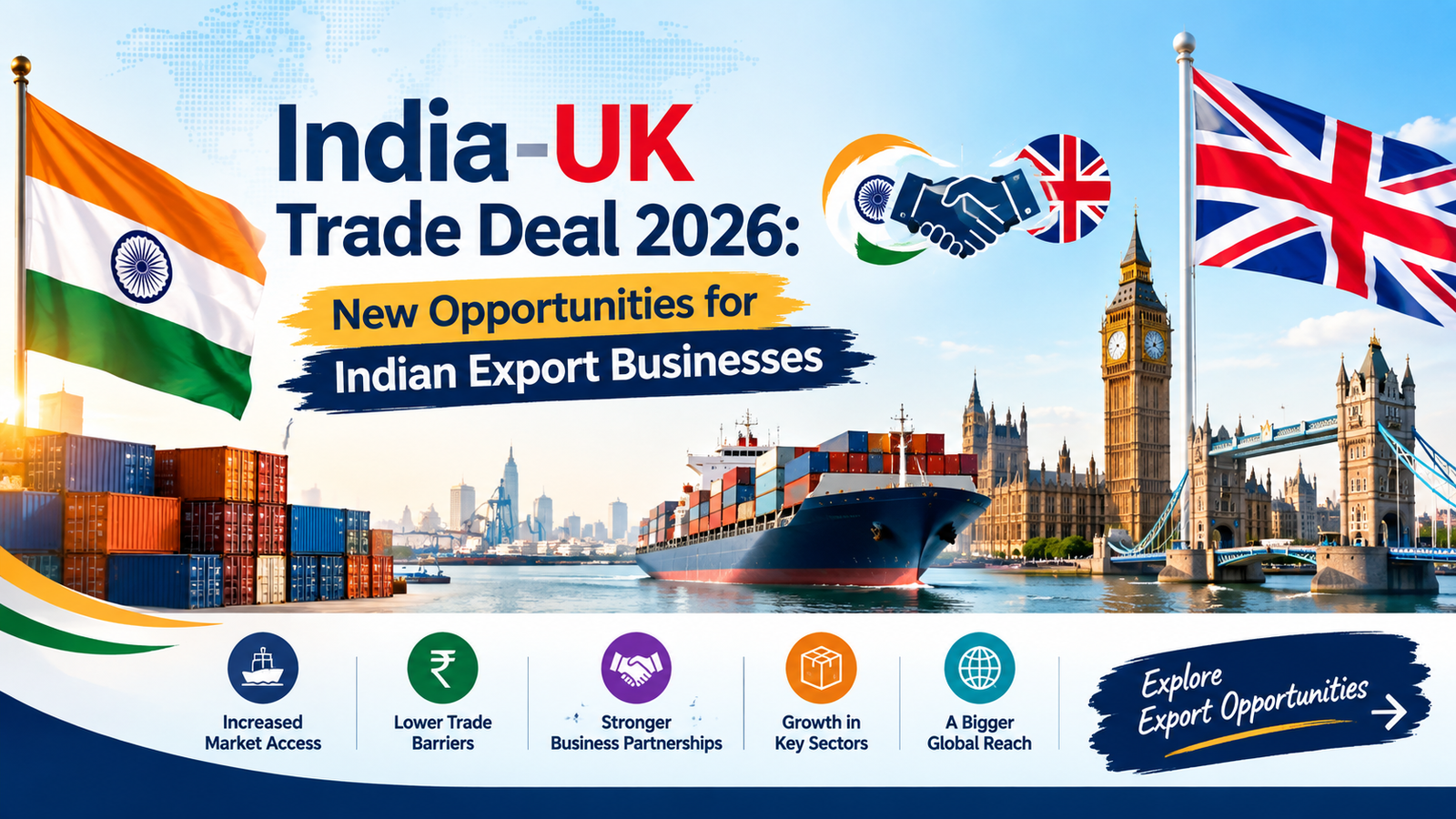
The India-UK trade relationship has entered a new phase in 2026. The India-UK Free Trade Agreement (FTA), formally known as the Comprehensive Economic and Trade Agreement (CETA), came into force on 15 July 2026. The agreement is expected to make trade between the two countries easier by reducing tariffs and improving market access for businesses.
For Indian exporters, this development could create new possibilities across several product categories, particularly for businesses looking to expand into the UK market.
What Does the India-UK Trade Deal Mean for Exporters?
One of the most important features of the agreement is the reduction of tariffs on Indian goods entering the UK. According to the UK government, 99% of Indian goods entering the UK will either be duty-free or subject to reduced tariffs under the agreement.
Lower tariffs can help reduce the landed cost of eligible Indian products and potentially improve their competitiveness in the UK. However, exporters still need to meet the agreement's rules of origin, customs, product standards and documentation requirements to claim preferential treatment.
Key Export Opportunities for Indian Businesses
The agreement covers a wide range of sectors, creating opportunities for Indian manufacturers, suppliers and exporters.
1. Textiles and Apparel
India's textile and clothing industry has strong export experience. Improved tariff access can help Indian manufacturers compete for UK buyers seeking garments, fabrics, home textiles and related products.
2. Leather and Footwear
Indian leather goods and footwear manufacturers may also find opportunities to expand their presence among UK importers, wholesalers and retailers. Competitive pricing combined with established manufacturing capabilities can support international business growth.
3. Agricultural and Processed Food Products
Agricultural products and processed foods are another important area for exporters. India's diverse agricultural base provides opportunities in products such as spices, processed foods, selected fresh produce and other food categories, subject to applicable UK requirements. The Indian government has highlighted agriculture as an important area benefiting from expanded UK market access, while certain products remain excluded or subject to specific treatment.
4. Engineering Goods and Auto Components
Indian manufacturers of auto components, machinery, engineering products and industrial goods can explore new opportunities with UK buyers. Better tariff access may make it easier for eligible products to compete in a developed international market.
5. Pharmaceuticals and Chemicals
India is already an important global supplier of pharmaceutical and chemical products. The improved trade framework can encourage businesses in these sectors to explore additional UK partnerships, while continuing to comply with the relevant regulatory and product requirements.
What Should Indian Exporters Do Now?
The trade agreement creates an opportunity, but simply having lower tariffs does not guarantee export success. Indian businesses should first identify products with genuine UK demand and check the exact tariff treatment applicable to their HS codes.
Exporters should also review rules of origin, certificates or origin declarations, customs procedures, packaging, labelling and UK product standards before entering the market.
Businesses can also research UK importers, distributors, wholesalers and B2B buyers to understand pricing, order quantities and market expectations.
A New Chapter for India-UK Trade
The India-UK trade deal represents an important development for Indian exporters seeking international growth. With broader tariff access and a clearer framework for bilateral trade, businesses across manufacturing, agriculture, textiles, engineering, food processing and other sectors can explore new UK market opportunities.
For Indian businesses, the next step is preparation: understand the agreement, identify suitable products, verify eligibility and build reliable relationships with UK buyers. Those fundamentals can turn improved market access into practical export opportunities.
Note: Tariff benefits vary by product and eligibility. Exporters should verify the applicable HS code, tariff schedule and rules of origin before quoting or shipping goods.
suggestion link
Call: +91 88264 00869
Website: Top Trade India
Email: info@toptradeindia.com
Follow us on: Instagram , Facebook , YouTube

Comments (0)
No comments yet. Be the first to comment!
Leave a Comment