

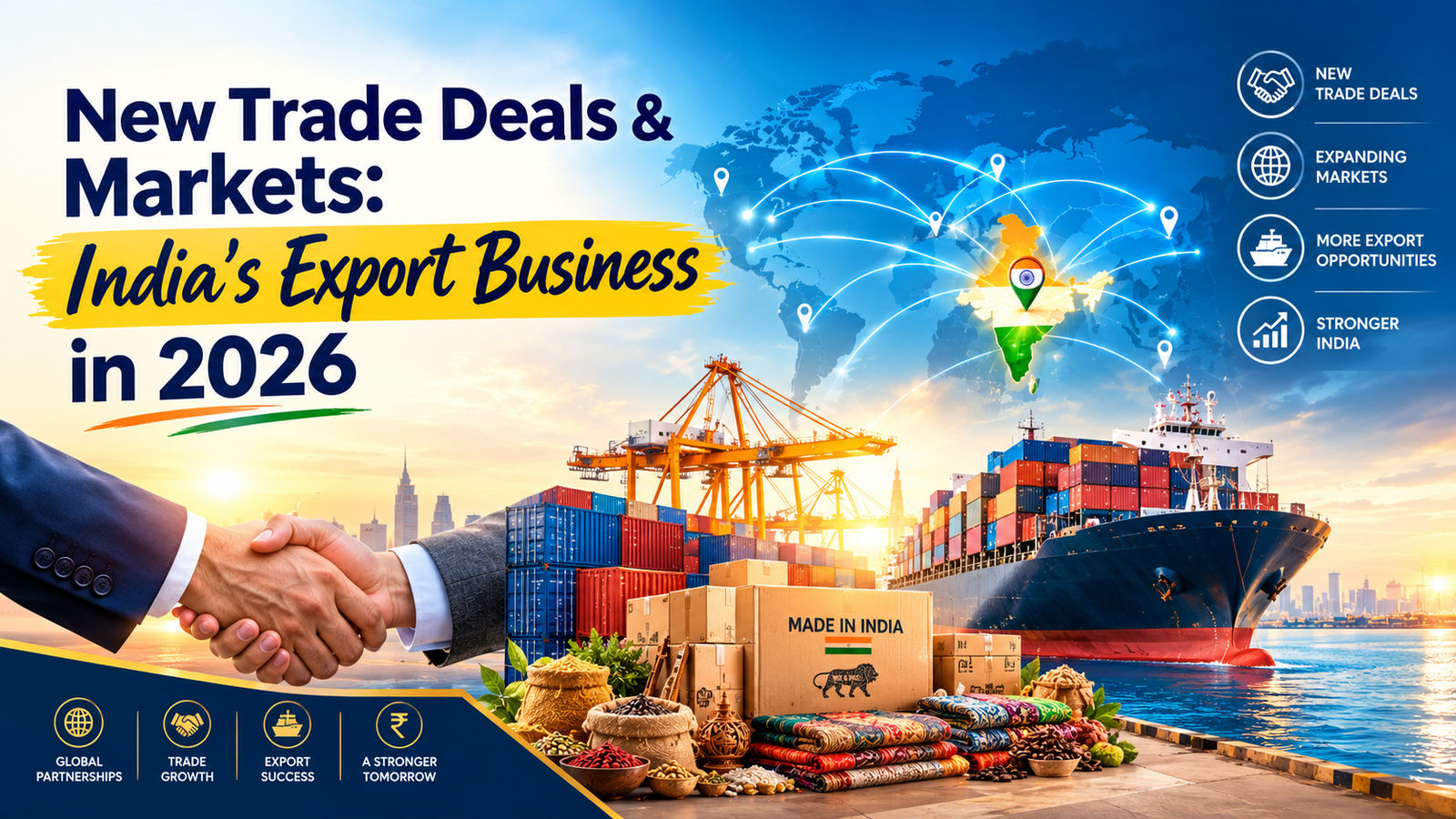
India’s export landscape is kinda shifting fast in 2026. New trade agreements, more international demand, and stronger links with overseas markets are giving Indian businesses a bunch of new openings. From manufacturers, agricultural suppliers too, textiles, engineering products, food items, and chemicals, companies in many sectors are starting to look past the usual places.
For firms that are ready to expand internationally, this moment feels like a good window to explore the Indian export business and meet new buyers across the world.
New Trade Deals Are Opening Market Opportunities
One of the biggest things shaping India global trade 2026 is how India keeps growing its trade relationships with different international markets. Trade agreements can help businesses reach foreign customers by improving market access , lowering specific trade barriers and, creating clearer commercial chances for companies.
So for exporters, some places that used to look “too hard” might become way more reachable. Companies can dig into product demand, learn import requirements, and then match with the right overseas buyers.
That said, a trade agreement is not some magic switch. Export success still needs smart pricing, steady product quality, correct documentation, dependable logistics, and a real understanding of what the target market actually wants.
Growing B2B Export Opportunities in India
Also, the growth of digital business networks has changed how exporters locate international customers. Instead of relying only on agents or trade events, businesses can now show their goods to potential buyers via online B2B platforms , and digital channels.
This is creating more B2B export opportunities in India, especially for small and medium-sized businesses. Picture a manufacturer in India connecting with an importer, distributor, wholesaler, or retailer that’s sitting thousands of kilometres away, no dramatic phone calls required.
Categories that keep pulling attention include agricultural commodities, spices, textiles, handicrafts, engineering goods, packaging materials, chemicals, processed foods, and industrial products—yes even the less “obvious” ones.
Indian Exporters and Suppliers Can Reach More Buyers
For Indian exporters and suppliers, entering a new market usually means more than just posting products online. International buyers often expect solid details, like specs, certifications , pricing, minimum order quantities, production capacity, and the exact delivery terms.
Because of that, a professional digital presence can really matter. Businesses should keep product catalogues updated, write clear descriptions, reply quickly to enquiries, and share correct company information.
Trust is huge in cross-border B2B trade. Buyers tend to keep the conversation going when suppliers communicate properly and show they can fill orders consistently, on time and on spec, not just “in theory”.
Technology Is Supporting B2B Export Business in India
Technology is becoming a big part of B2B export business in India. Things like digital catalogues, online enquiries, virtual meetings, international payment options, logistics platforms, and data-based market research help companies handle international trade more smoothly.
If you’re new to exporting, tech can also make market research feel less overwhelming. Businesses can track demand patterns, compare competitors, test potential markets, and understand buyer preferences before going all-in.
Even then, exporters still have to stay alert. Regulations, product standards, customs processes, taxes, and the paperwork rules for every destination country can differ, so ignoring that is risky.
What Should Indian Businesses Do Next?
If businesses want to benefit from new trade openings, they should start with market research that’s actually practical. Rather than trying every country on the map, exporters can pick a few markets where their products match strong demand and where competition looks manageable.
Next, they should prepare export-ready product details, tighten up supply and logistics processes, and then reach out actively to verified international buyers.
The Road Ahead for Indian Exports
The whole India global trade 2026 picture is not only about fresh agreements. It’s also about Indian businesses becoming more connected , more digital, and more globally minded.
With new markets appearing and international buyers searching for reliable suppliers, the next period could bring real opportunities for companies that are willing to meet global standards. For Indian firms, combining product quality, competitive pricing, digital visibility, and strong buyer relationships can be a grounded way to expand beyond domestic markets, without guessing too much.
suggestion link
Call: +91 88264 00869
Website: Top Trade India
Email: info@toptradeindia.com
Follow us on: Instagram , Facebook , YouTube

Comments (0)
No comments yet. Be the first to comment!
Leave a Comment