

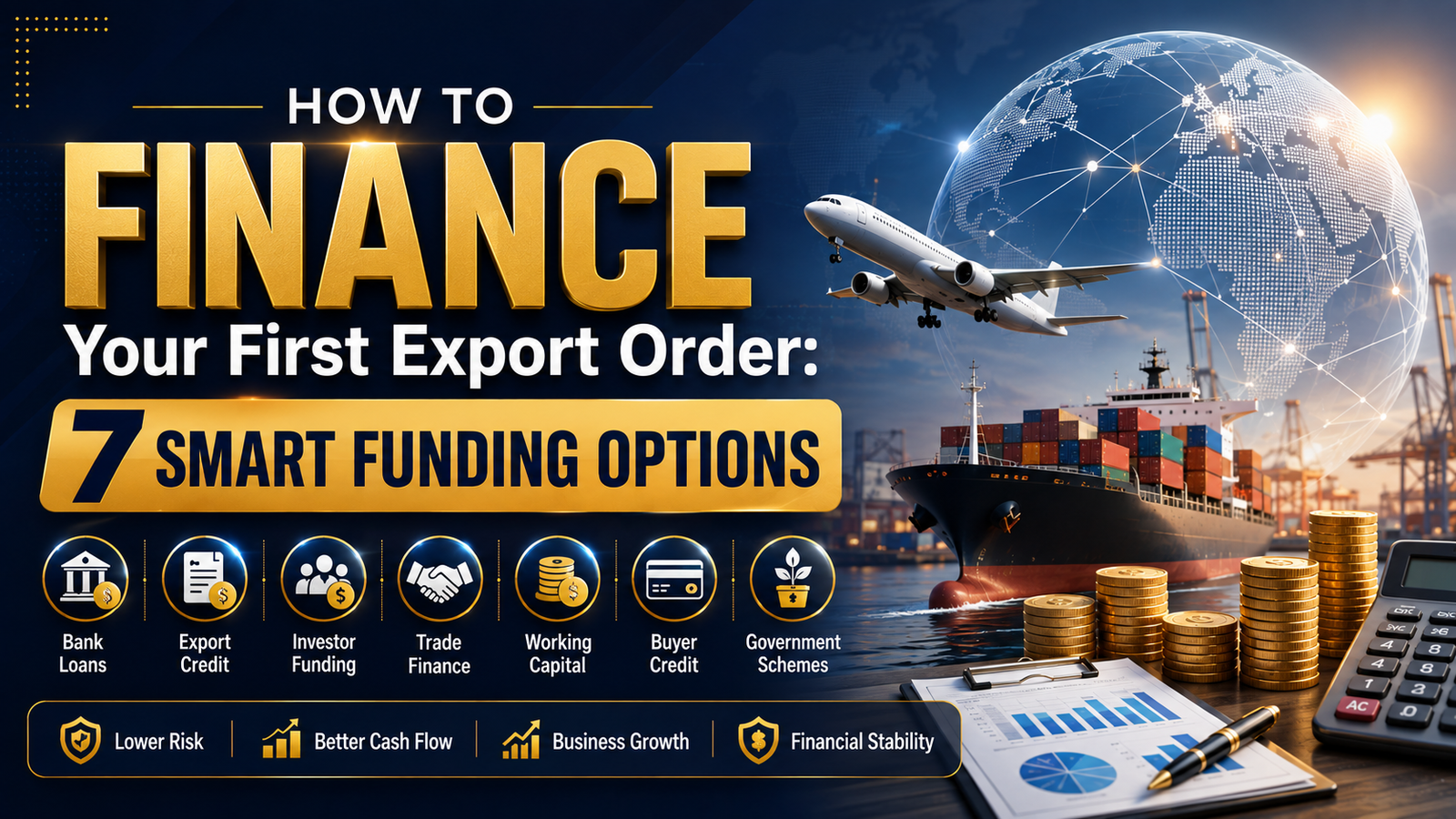
How to Finance Your First Export Order: 7 Smart Funding Options
Starting your first export order is exciting, but one question often comes up: how will you finance the order before the buyer makes the payment? Exporting usually requires money upfront for raw materials, production, packaging, transportation, documentation, and other costs.
Fortunately, new exporters have several financing options available. Choosing the right one can help you manage cash flow without putting unnecessary pressure on your business.
1. Pre-Shipment Export Finance
Pre-shipment finance, also known as packing credit, is designed to help exporters meet expenses before goods are shipped. Banks may provide funds against a confirmed export order or letter of credit.
The money can be used for purchasing raw materials, manufacturing, processing, packaging, and other expenses related to the export order. For a first-time exporter, this can be one of the most useful export finance options in India.
2. Post-Shipment Finance
Sometimes the biggest challenge begins after the goods have been shipped. You may have completed the order but still need to wait for the overseas buyer to make payment.
Post-shipment finance helps exporters manage this gap. Banks can provide financing against eligible export receivables, allowing businesses to maintain working capital while waiting for payment.
3. Letter of Credit-Based Financing
A Letter of Credit (LC) provides additional payment security because the buyer's bank undertakes to make payment when the exporter meets the agreed terms and submits the required documents.
Banks may offer finance against an LC, making it easier to purchase materials and prepare the shipment. For new exporters, an LC can also reduce some of the risks associated with international trade.
4. Invoice Discounting or Factoring
If you have already shipped your products and raised an invoice, invoice discounting can help you access money before the buyer's payment arrives.
Factoring works on a similar principle, where a financial institution or factoring company provides funds against eligible invoices. This option can be useful when overseas buyers have longer payment cycles.
5. Buyer Advance Payment
Not every export transaction needs to be financed through a bank. Negotiating an advance payment from the international buyer can significantly reduce your funding requirement.
Depending on the agreement, the buyer may pay a percentage of the order value upfront, with the balance payable before shipment or after the agreed payment terms. This can be particularly helpful for a first export order with substantial production costs.
6. Export Credit Insurance
International buyers can sometimes delay payments or, in difficult situations, fail to pay. Export credit insurance can help protect exporters against certain commercial and political risks.
While insurance itself is not direct working-capital finance, it can make export transactions more secure and may support your ability to obtain financing from financial institutions.
7. Business Working Capital
If your business already has an established banking relationship, a working capital loan, cash credit facility, or overdraft may help finance export-related expenses.
Before borrowing, calculate the complete cost of the order, including production, freight, insurance, customs-related expenses, documentation, and currency fluctuations. Borrow only what you realistically need and understand the repayment terms.
How to Choose the Right Export Funding Option
The best funding option depends on your order value, buyer's payment terms, shipment schedule, business history, and available collateral. Before selecting financing, compare the interest rate, processing fees, repayment period, currency risk, and documentation requirements.
For a first-time exporter, keeping the financing structure simple is often a smart approach. A combination of buyer advance, pre-shipment finance, and suitable payment protection can provide a practical starting point.
Final Thoughts
Financing your first international order does not have to be complicated. With proper planning and the right export financing solution, you can cover production costs, maintain healthy cash flow, and fulfill your buyer's order confidently.
The key is to understand your total funding requirement before accepting the order and choose a financing option that matches your payment cycle. A well-planned approach can turn your first export transaction into the foundation for long-term international business growth.
suggestion link
Call: +91 88264 00869
Website: Top Trade India
Email: info@toptradeindia.com
Comments (0)
No comments yet. Be the first to comment!
Leave a Comment