


How to Finance an Export Order: A Complete Guide for Indian Exporters
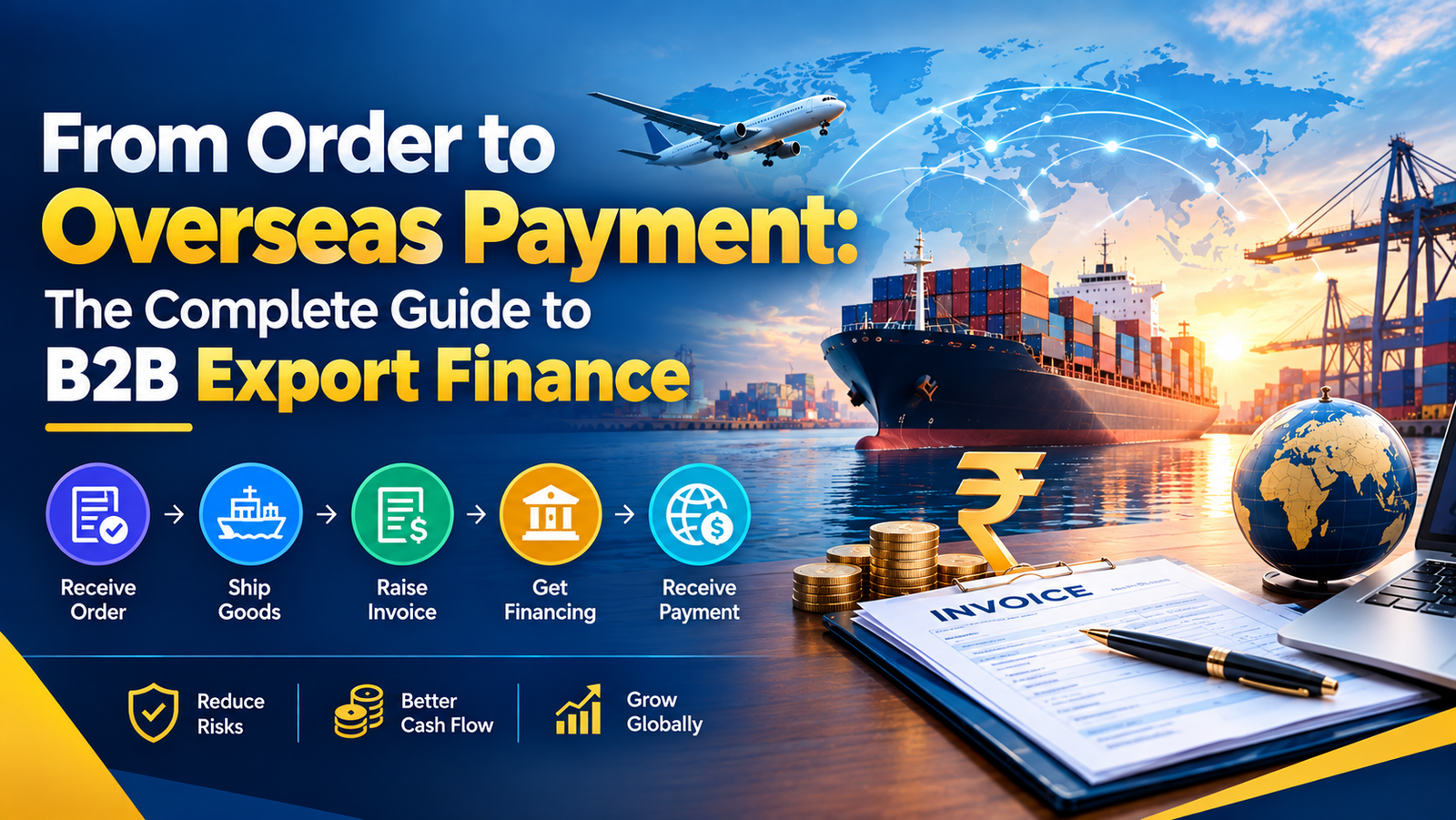
For many Indian exporters, getting an international order is exciting—but arranging the money to produce, package, and ship it can be challenging. Export finance helps businesses manage this gap between receiving an order and getting paid by the overseas buyer.
Whether you are a first-time exporter or an established business, understanding the right export finance options in India can make your cash flow more predictable and help you accept larger orders with confidence.
Why Export Finance Matters
An export order often requires upfront spending on raw materials, manufacturing, packaging, transportation, documentation, and other expenses. However, payment from the international buyer may arrive weeks or months later.
This creates a working-capital gap. Export financing can bridge this gap, allowing exporters to fulfil orders without putting excessive pressure on their own funds.
1. Pre-Shipment Finance
Pre-shipment finance, commonly known as packing credit, is one of the most useful funding options for exporters. It provides working capital before goods are shipped.
The funds can generally be used for purchasing raw materials, manufacturing, processing, packaging, and other activities required to complete an export order.
For businesses with confirmed export orders, this can be an effective way to manage production expenses.
2. Post-Shipment Finance
After the goods have been shipped, exporters may still need funds while waiting for payment from the buyer. Post-shipment finance helps manage this period.
Depending on the arrangement, an exporter may receive financing against eligible export documents or receivables. This can improve liquidity and reduce the pressure caused by long payment cycles.
3. Invoice Financing and Factoring
If an exporter regularly sells on credit terms, invoice financing for exporters can be another useful solution. Instead of waiting for the buyer to pay the invoice, the exporter can obtain financing against eligible receivables.
Factoring can also help businesses convert outstanding invoices into working capital while reducing the impact of delayed payments.
4. Bank Credit and Working Capital
Banks offer different forms of working-capital support to eligible businesses. Exporters may explore options such as cash credit, overdraft facilities, or other business financing arrangements.
Before choosing a facility, compare interest rates, processing charges, collateral requirements, repayment terms, and eligibility conditions.
5. Government- and Export-Related Support
Indian exporters can also explore financing and risk-support mechanisms associated with institutions such as EXIM Bank and ECGC. These organizations play an important role in supporting international trade and managing certain export-related risks.
The availability and eligibility of specific schemes can change, so exporters should check the latest official guidelines before applying.
How to Choose the Right Export Finance Option
The right funding option depends on factors such as the size of the export order, production cost, buyer payment terms, business cash flow, repayment capacity, and whether the order is confirmed.
Before borrowing, calculate the total cost of fulfilling the order and estimate when the export payment is likely to arrive. Avoid taking more financing than the business actually needs.
Final Thoughts
Financing can be the difference between simply receiving an export order and successfully fulfilling it. From pre-shipment finance and post-shipment finance to invoice financing and bank working-capital facilities, Indian exporters have several ways to manage cash flow.
A well-planned export finance strategy allows businesses to fulfil international orders on time, maintain healthy working capital, and create a stronger foundation for long-term export growth.
suggestion link
Call: +91 88264 00869
Website: Top Trade India
Email: info@toptradeindia.com
Follow us on: Instagram , Facebook , YouTube


Comments (0)
No comments yet. Be the first to comment!
Leave a Comment