

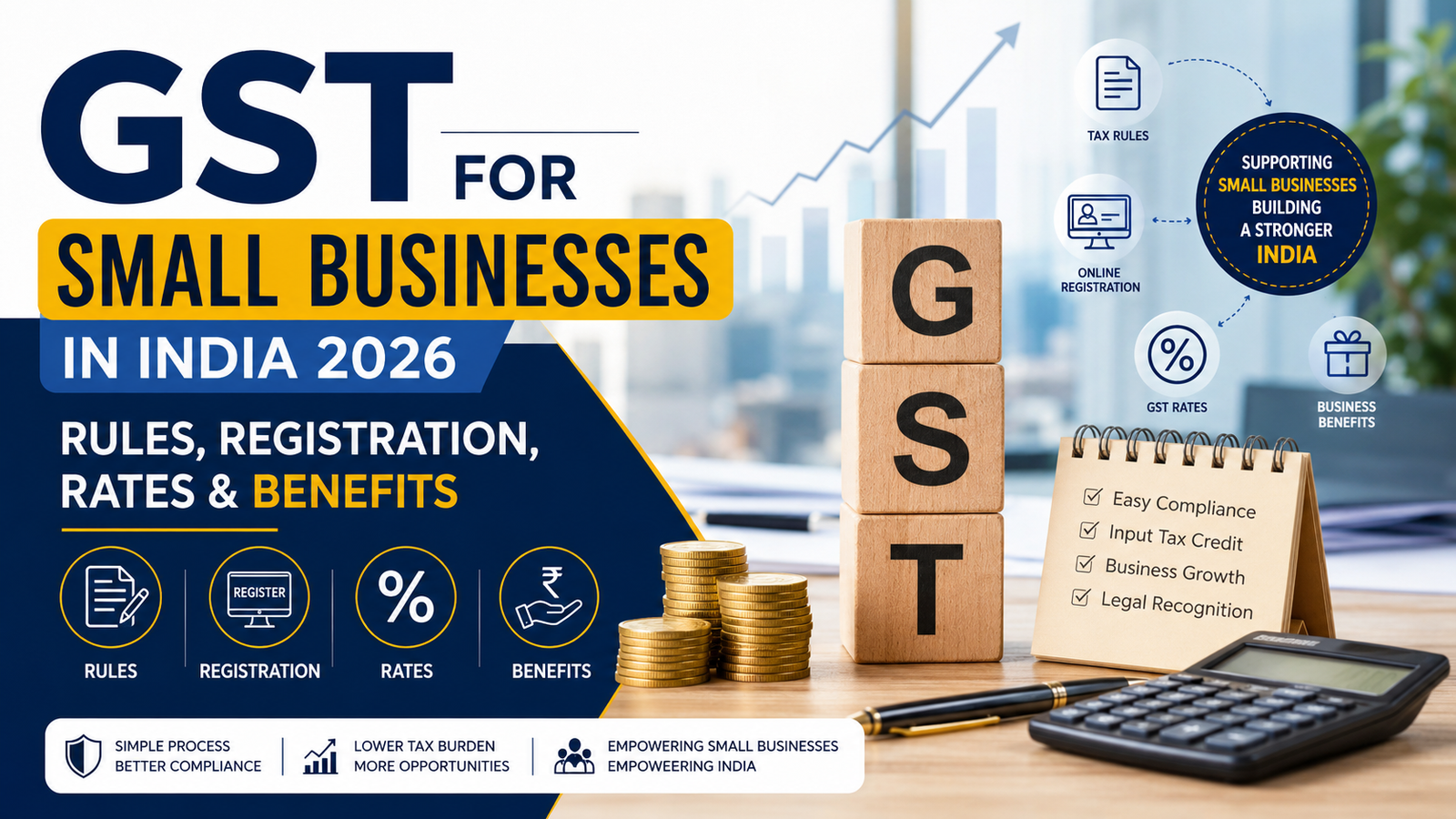
Running a small business in India comes with many responsibilities, and understanding tax rules is one of the most important. GST for small businesses in India can seem complicated at first, but once you understand the basic rules, registration requirements, tax rates and benefits, managing GST becomes much easier.
In 2026, GST continues to play an important role for traders, manufacturers, service providers and other small businesses. So, if you are starting a business or already running one, here is what you should know.
What Is GST for Small Businesses?
Goods and Services Tax (GST) is an indirect tax charged on the supply of goods and services in India. Instead of dealing with multiple indirect taxes, businesses operate under a common GST framework.
For small businesses, GST registration depends mainly on annual aggregate turnover, the nature of business and certain types of transactions.
GST Registration for Small Businesses in India
One of the most common questions is: When is GST registration required?
Generally, the GST registration threshold is ?40 lakh for suppliers of goods in many states, while the threshold for suppliers of services is generally ?20 lakh. Lower limits apply in certain states and specific situations.
However, turnover is not the only factor. Certain businesses may need GST registration even when their turnover is below the normal threshold because of the nature of their activities or specific provisions of GST law.
For example, businesses involved in certain taxable inter-State supplies or specified categories can have different registration requirements. Therefore, it is important to check the rules applicable to your business before deciding whether GST registration is mandatory.
GST Tax Rates in India
GST rates depend on the product or service being supplied. There is no single GST rate applicable to every business.
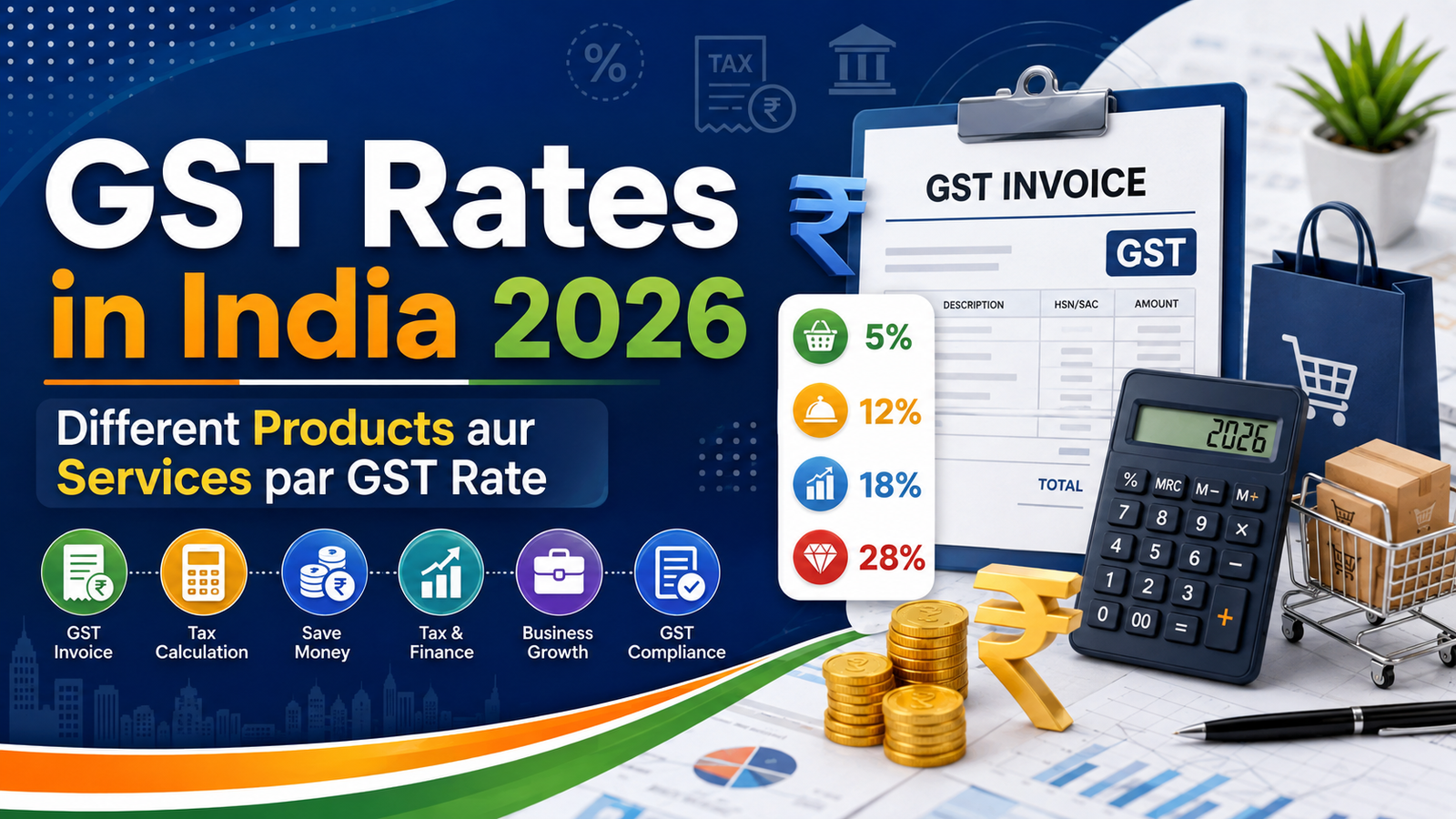
Depending on the classification of goods or services, rates can include 0%, 5%, 12%, 18% and higher rates for certain specified supplies. Businesses should identify the correct HSN or SAC classification before charging GST to customers.
Using the correct GST rate is important because charging the wrong rate can create problems during return filing, invoicing and tax reconciliation.
Composition Scheme for Small Businesses
Small businesses looking for simpler GST compliance can consider the GST Composition Scheme, if they meet the eligibility conditions.
Under the scheme, eligible taxpayers pay GST at prescribed rates based on turnover and generally follow simpler compliance procedures. The GST portal states that the composition scheme has turnover limits depending on whether the business deals in goods, services or mixed supplies.
However, there are restrictions. A composition taxpayer generally cannot collect GST separately from customers, cannot claim input tax credit and has restrictions on making inter-State supplies.
Therefore, the composition scheme may be useful for some local small businesses, but it is not automatically the best option for everyone.
Benefits of GST Registration for Small Businesses
Although GST compliance requires regular attention, registration can offer several advantages:
- Input Tax Credit: Eligible businesses can claim credit for GST paid on business purchases.
- Better Business Credibility: A GSTIN can make a business appear more established to customers and other businesses.
- B2B Opportunities: GST registration can make it easier to work with other registered businesses.
- Inter-State Business: GST helps businesses operate within a structured tax framework across different states.
- Proper Invoicing: Registered businesses can issue GST-compliant tax invoices.
- Business Expansion: A formal tax structure can support growth and participation in larger supply chains.
The government has also highlighted benefits of GST for small traders and entrepreneurs, including a higher registration threshold for eligible suppliers and a common tax framework.
GST Compliance: What Small Businesses Should Remember
After GST registration, businesses need to maintain proper invoices, records and tax information. Depending on the taxpayer category, GST returns and payments must be completed according to the applicable filing schedule.
For example, eligible taxpayers can opt for quarterly filing of GSTR-1 under the prescribed conditions, while regular taxpayers may have monthly reporting requirements.
Keeping sales and purchase records updated throughout the year can make GST return filing much easier.
Final Thoughts
For small businesses, understanding GST rules in India 2026 is not just about paying tax. It is also about maintaining proper records, issuing correct invoices and building a compliant business.
Before registering for GST or choosing the Composition Scheme, check the rules applicable to your specific business, state, turnover and type of supply. When managed correctly, GST compliance can become a routine part of running and growing a small business in India.
suggestion link
Call: +91 88264 00869
Website: Top Trade India
Email: info@toptradeindia.com
Follow us on: Instagram , Facebook , YouTube
Comments (0)
No comments yet. Be the first to comment!
Leave a Comment