

Introduction
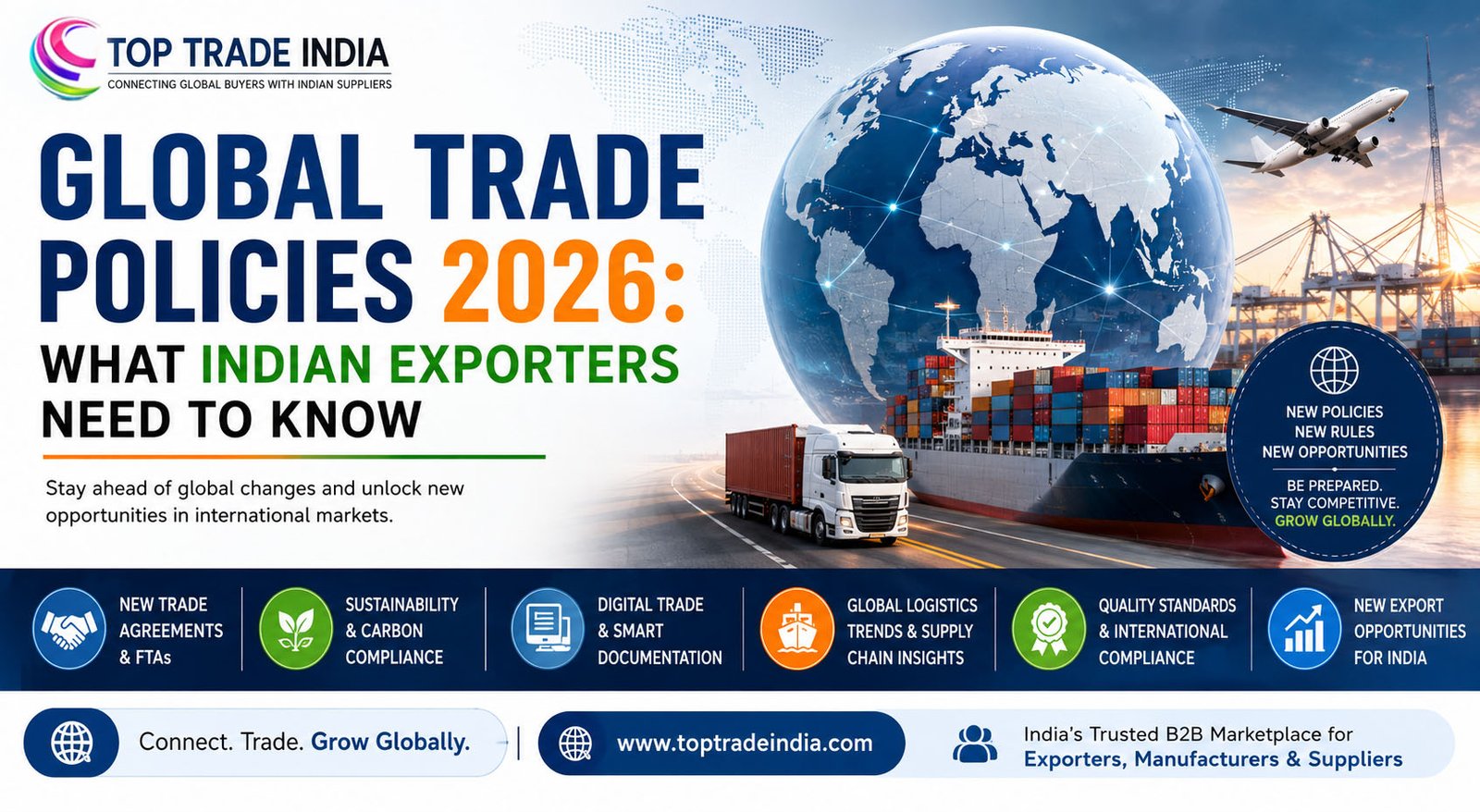
The global trade landscape in 2026 is evolving rapidly. Changing import-export regulations, geopolitical developments, sustainability requirements, digital trade systems, and shifting supply chains are creating both opportunities and challenges for Indian exporters.
For exporters, manufacturers, suppliers, and SMEs in India, understanding the latest global trade policies is no longer optional — it is essential for long-term business growth.
At Top Trade India, we closely monitor international trade developments to help Indian businesses stay competitive in global markets.
1. Rise of “China + 1” Strategy Creating New Opportunities for India
Many international buyers are actively diversifying their sourcing away from China due to supply chain risks, rising manufacturing costs, and geopolitical tensions.
This has opened major opportunities for Indian exporters in sectors like:
- Agriculture Products
- Spices & Food Processing
- Textiles & Garments
- Engineering Goods
- Chemicals
- Pharmaceutical Products
- Leather Products
- Handicrafts
- Organic Products
Countries like the USA, UAE, Germany, Australia, Saudi Arabia, and African nations are increasingly looking toward Indian suppliers.
Indian exporters registered on reliable B2B trade platforms like Top Trade India B2B Marketplace can gain better visibility among international buyers searching for alternative sourcing partners.
2. Free Trade Agreements (FTAs) Are Becoming More Important
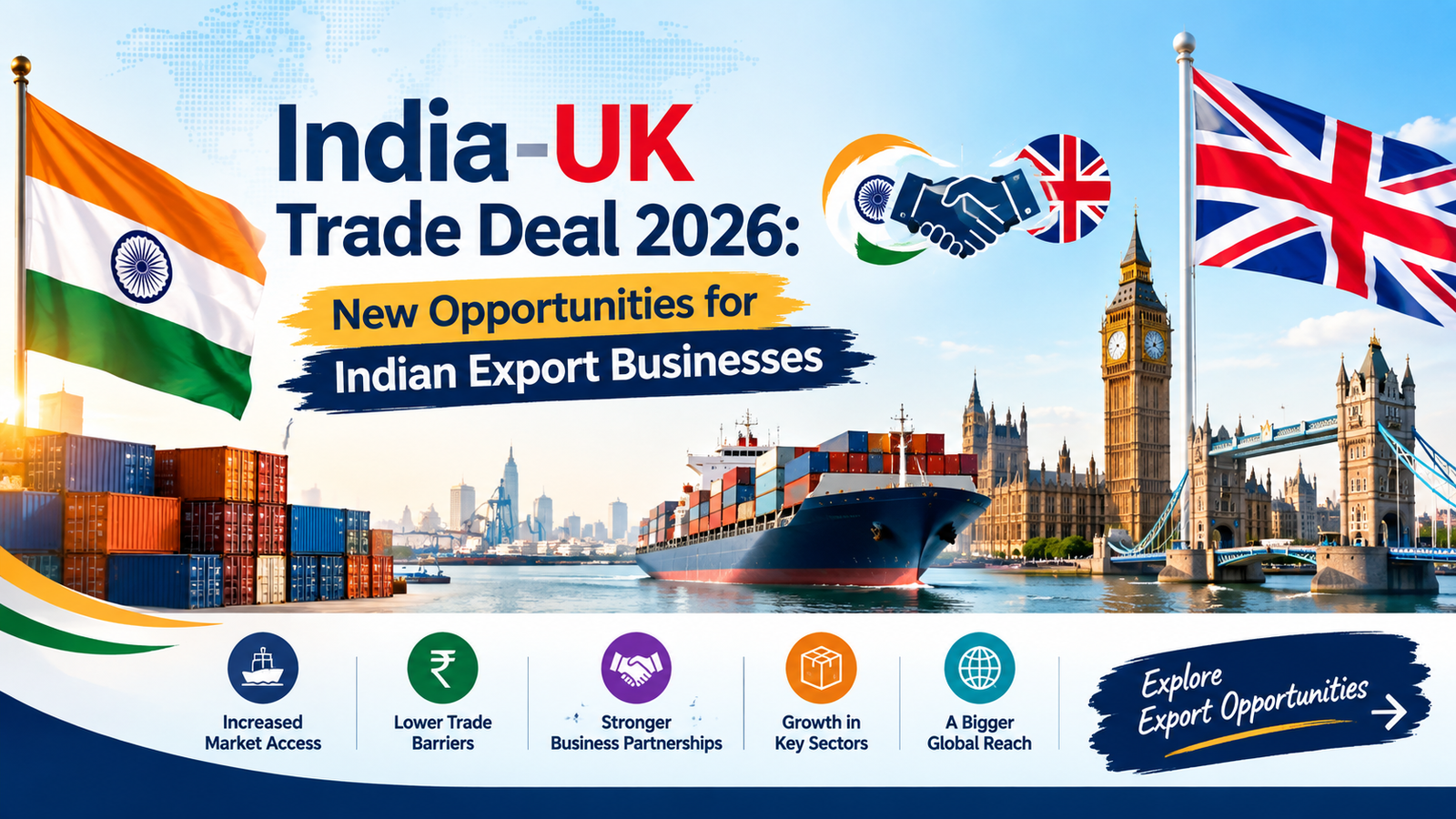
India is actively strengthening trade relationships through Free Trade Agreements (FTAs) with several countries.
Recent and upcoming agreements are expected to reduce tariffs and improve export opportunities in:
- United Kingdom
- European Union
- UAE
- Australia
- Canada
- Gulf Countries
These agreements can help Indian exporters:
- Reduce import duties
- Improve product competitiveness
- Access new buyer markets
- Increase export volumes
Exporters should regularly monitor updates from the Directorate General of Foreign Trade (DGFT) and Ministry of Commerce & Industry India.
3. Sustainability & Carbon Compliance Are Becoming Mandatory
Global buyers are now focusing heavily on:
- Sustainable sourcing
- Eco-friendly packaging
- Carbon footprint reduction
- Ethical manufacturing
- Traceability systems
The European Union’s Carbon Border Adjustment Mechanism (CBAM) and ESG compliance rules are impacting exporters worldwide.
Indian exporters dealing in steel, aluminum, chemicals, textiles, and manufacturing sectors must prepare for:
- Carbon reporting
- Sustainable certifications
- Green supply chain audits
- Eco-packaging requirements
Businesses that adopt sustainable practices early will gain stronger trust from international buyers.
4. Digital Trade Documentation Is Replacing Traditional Systems
2026 is seeing rapid adoption of digital export documentation worldwide.
Exporters are increasingly using:
- Electronic Bills of Lading
- Digital Certificates of Origin
- Online Customs Clearance
- E-Invoicing
- AI-Based Trade Verification
- Blockchain-enabled logistics tracking
This digital shift helps reduce:
- Documentation delays
- Human errors
- Fraud risks
- Shipment processing time
Indian exporters should upgrade their systems and work with professional export support companies to remain globally competitive.
5. Global Logistics Costs Continue to Fluctuate
Shipping rates and logistics costs remain uncertain due to:
- Red Sea route disruptions
- Fuel price fluctuations
- Container shortages
- Port congestion
- Geopolitical conflicts
Exporters must focus on:
- Better freight planning
- Multiple shipping partners
- Inventory management
- Long-term buyer contracts
- Risk diversification
Reliable international trade networks and verified B2B marketplaces can help businesses find stable buyers despite global uncertainties.
6. Product Quality Standards Are Becoming Stricter
Countries are implementing stronger quality and compliance standards for imported goods.
Indian exporters should prioritize:
- International Certifications
- Product Testing
- Export Packaging Standards
- Food Safety Compliance
- Labeling Requirements
Popular certifications include:
- ISO Certification
- HACCP
- GMP
- FDA Approval
- Organic Certifications
Failure to meet global standards can result in:
- Shipment rejection
- Payment delays
- Import bans
- Loss of buyer trust
7. Demand for Indian Agricultural & Food Products Is Growing
Indian agricultural exports continue to see strong global demand due to:
- Competitive pricing
- Diverse climate production
- Organic farming growth
- Strong spice industry
- Processed food expansion
High-demand export categories include:
- Rice
- Spices
- Fresh Fruits
- Vegetables
- Pulses
- Tea & Coffee
- Honey
- Millets
- Frozen Foods
Indian agri exporters can benefit by promoting products globally through platforms like Top Trade India Export Marketplace.
8. B2B Digital Platforms Are Becoming Essential for Export Growth
Traditional trade methods alone are no longer enough.
Modern exporters now rely heavily on:
- B2B marketplaces
- Digital catalogs
- Online lead generation
- International SEO
- Export promotion websites
- Social media visibility
A strong online export presence helps businesses:
- Generate international inquiries
- Build credibility
- Connect with verified buyers
- Expand globally faster
Companies listed on Top Trade India can improve global exposure and connect with importers across multiple industries.
9. Government Export Support Schemes Continue to Help Exporters
The Indian government continues supporting exporters through initiatives like:
- RoDTEP Scheme
- Export Promotion Councils
- MSME Export Assistance
- Startup Export Support
- District as Export Hub Program
Exporters should regularly explore opportunities through:
10. How Indian Exporters Can Stay Competitive in 2026
To succeed globally in 2026, Indian exporters should focus on:
Key Strategies
Build Strong International Branding
Create a professional digital presence with export-focused marketing.
Improve Product Quality
Follow international standards and compliance systems.
Diversify Export Markets
Avoid depending on a single country or buyer.
Use Digital B2B Platforms
Increase buyer visibility using trusted trade portals.
Stay Updated on Global Policies
Regularly monitor international trade updates and tariff changes.
Invest in Sustainability
Eco-friendly operations are becoming a competitive advantage.
Conclusion
Global trade policies in 2026 are reshaping the future of international business. While new regulations and compliance requirements may seem challenging, they also create massive opportunities for prepared Indian exporters.
Businesses that embrace digital transformation, sustainability, quality standards, and international market visibility will lead the next phase of export growth.
At Top Trade India, we are committed to helping Indian exporters, manufacturers, suppliers, and global buyers connect efficiently and grow internationally.
If you are looking to expand your export business globally, now is the right time to strengthen your international presence.
Comments (0)
No comments yet. Be the first to comment!
Leave a Comment