

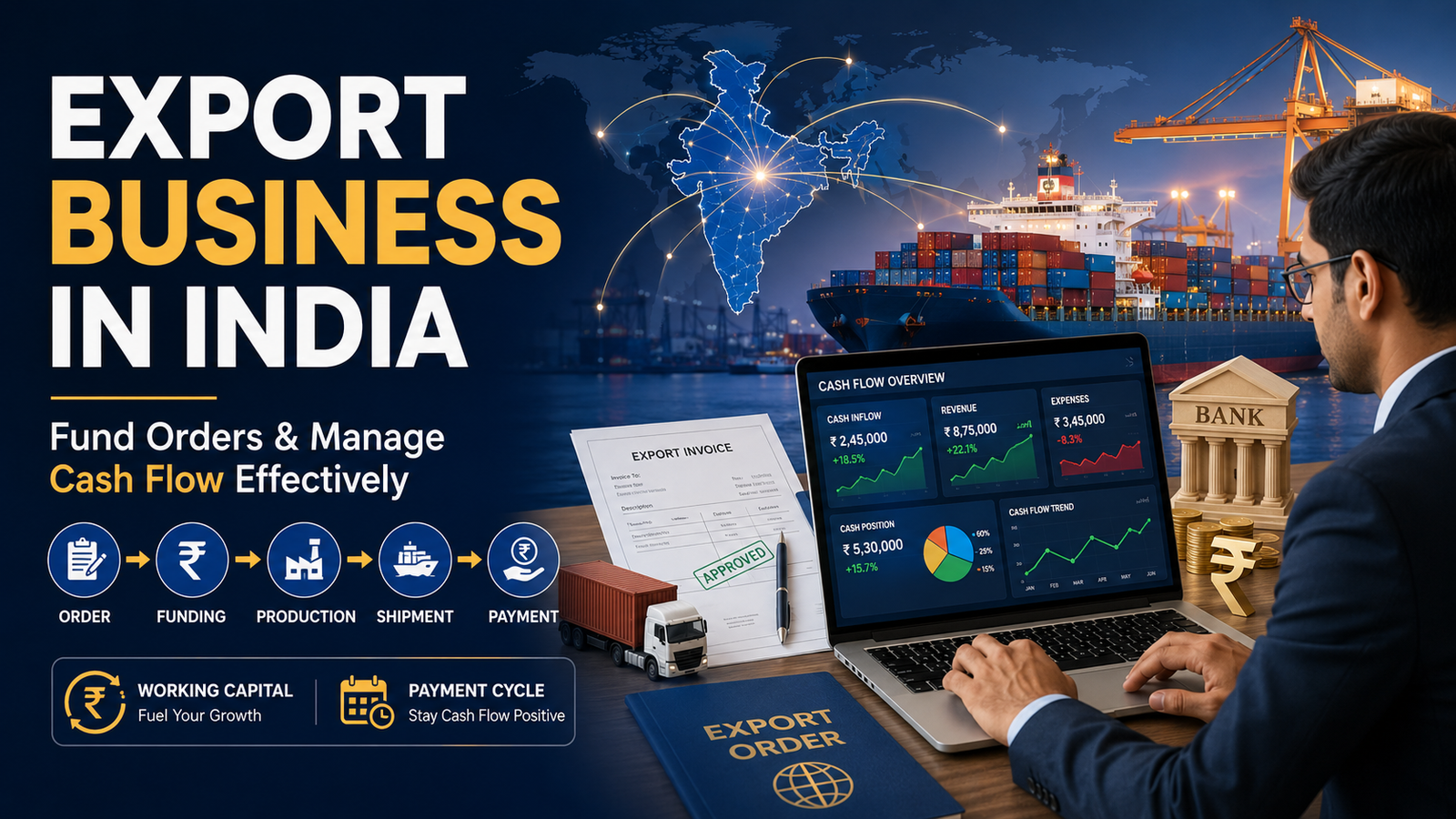
Starting an export business in India can open the door to international customers and larger markets. But getting an export order is only half the job. The bigger challenge for many exporters is arranging enough money to purchase goods, manage production, handle shipping costs, and wait for the buyer's payment.
This is where proper export business finance and cash-flow planning become extremely important.
Why Cash Flow Matters in an Export Business
In domestic business, payment may arrive relatively quickly. Export transactions can take longer because there are several stages between receiving an order and receiving the final payment.
An exporter may need money for raw materials, packaging, labour, transportation, customs procedures, freight, insurance, and other expenses before receiving payment from the overseas buyer.
A strong export cash flow management strategy helps businesses continue operations without facing unnecessary financial pressure.
1. Calculate the Total Cost Before Accepting an Order
Before confirming an international order, calculate the complete cost involved.
Include:
- Product or manufacturing cost
- Packaging and labelling
- Inland transportation
- Customs-related expenses
- Freight and insurance
- Documentation charges
- Bank charges
- Taxes and other applicable costs
This gives you a clearer idea of how much working capital is needed for an export order.
Never calculate your requirement only from the product price. Small overlooked expenses can significantly reduce your profit margin.
2. Use Export Order Financing
If you receive a confirmed export order but do not have enough working capital to fulfil it, export order financing can be an option.
Banks and financial institutions may provide working-capital facilities against eligible export orders, subject to their assessment and applicable rules.
This can help exporters purchase raw materials, manufacture products, and prepare shipments without using all their existing cash.
For growing businesses, learning how to finance an export order can make it easier to accept larger orders without creating a serious cash shortage.
3. Consider Pre-Shipment and Post-Shipment Finance
Exporters often require finance at two different stages.
Pre-shipment finance can help cover expenses before goods are shipped, such as purchasing raw materials and manufacturing.
Post-shipment finance can help exporters manage the period between shipping the goods and receiving payment from the international buyer.
Understanding these options can make export business financing in India more manageable, especially when payment cycles are long.
4. Negotiate Better Payment Terms
Payment terms have a direct impact on cash flow.
Instead of accepting every buyer's preferred payment arrangement, exporters should carefully evaluate the financial impact of the agreed terms.
Depending on the transaction and buyer relationship, exporters may negotiate an advance payment, partial payment, or other suitable payment structure.
For new international buyers, secure payment terms can also reduce the risk of waiting months for payment.
5. Maintain a Separate Export Cash-Flow Forecast
A simple monthly cash-flow forecast can prevent many financial surprises.
Record:
Expected cash inflow:
Buyer payments, advances, refunds, and other receipts.
Expected cash outflow:
Supplier payments, salaries, freight, packaging, customs expenses, loan repayments, and operating costs.
Compare the expected inflows and outflows every month. If a shortage is likely, arrange financing before the problem actually occurs.
6. Avoid Depending on One Customer
Having one large overseas customer can feel comfortable when orders are strong, but it creates financial risk.
If that buyer delays an order or payment, your entire cash flow can be affected.
Building relationships with multiple international buyers and exploring different export markets can create a more stable revenue pipeline.
7. Keep an Emergency Working-Capital Reserve
Unexpected expenses are common in international trade. Freight rates can change, shipments may be delayed, or buyers may take longer than expected to make payments.
Maintaining an emergency reserve gives exporters additional breathing room.
Even a small reserve can help cover urgent expenses without immediately taking expensive short-term credit.
Final Thoughts
A successful export business in India is not only about finding international buyers and increasing sales. It is also about knowing when money will come in, when expenses must be paid, and how much working capital is required at every stage.
By using suitable export order financing, negotiating sensible payment terms, forecasting cash flow, controlling expenses, and maintaining a financial reserve, exporters can handle larger orders with greater confidence.
Good cash-flow management ultimately gives an export business the financial stability needed for sustainable international growth.
suggestion link
Call: +91 88264 00869
Website: Top Trade India
Email: info@toptradeindia.com
Follow us on: Instagram , Facebook , YouTube

Comments (0)
No comments yet. Be the first to comment!
Leave a Comment