

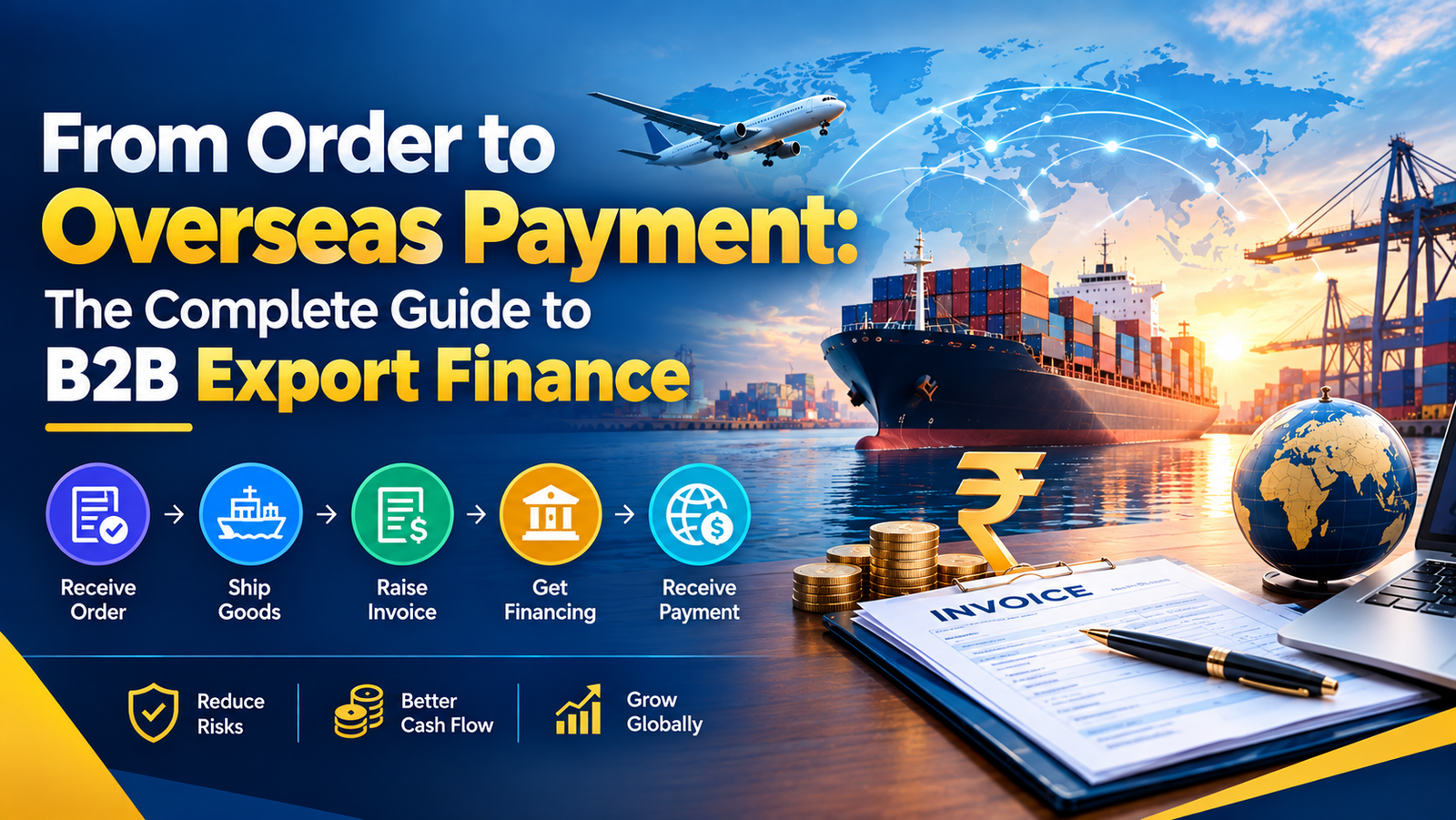
For an exporter, receiving a large international order is exciting—but fulfilling it can require significant money upfront. Raw materials need to be purchased, products manufactured or sourced, packaging arranged, and shipping costs paid before the overseas buyer makes the final payment.
This is where B2B export finance becomes important. The right financing solution can help exporters manage working capital, complete orders on time, and maintain a healthy cash flow throughout the export cycle.
What Is B2B Export Finance?
B2B export finance refers to financial solutions designed to support businesses involved in international trade. Exporters can use these facilities to manage expenses between receiving an order and collecting payment from an international buyer.
Depending on the transaction, financing may support purchasing inventory, production, packaging, transportation, customs-related expenses, or other export costs.
For small and growing exporters, access to export working capital finance can make it easier to accept larger orders without putting excessive pressure on their existing funds.
Step 1: Receive an International Order
The export finance process usually starts when an overseas buyer places an order.
Before accepting the order, an exporter should carefully review the buyer's payment terms, order value, delivery schedule, currency, and agreed Incoterms. These details influence how much working capital will be required and when the exporter is likely to receive payment.
A clear purchase order or export contract also makes it easier to approach banks and financial institutions for suitable trade finance.
Step 2: Arrange Working Capital
Once the order is confirmed, the exporter may need funds to purchase raw materials or finished goods.
Export working capital can help bridge this gap. Depending on eligibility and transaction requirements, exporters may explore options such as bank credit, packing credit, cash-credit facilities, or other trade finance solutions.
The objective is simple: keep the order moving without disturbing the company's regular cash flow.
Step 3: Manufacture, Pack and Ship
After arranging the necessary funds, the exporter can proceed with production, sourcing, quality checks, packaging, and logistics.
Exporters must also keep important documentation organized. Commercial invoices, packing lists, shipping documents, purchase orders, and other required paperwork can play an important role in the export payment and financing process.
Good documentation reduces delays and makes it easier to track the transaction from dispatch to delivery.
Step 4: Manage the Payment Period
One of the biggest challenges in international trade is the payment gap.
For example, an exporter may ship goods today while the buyer has 30, 60, or 90 days to make payment. During this period, the exporter still has salaries, supplier bills, logistics expenses, and new orders to manage.
This is where export trade finance and invoice financing can become useful. Depending on the arrangement, exporters may be able to access funds against eligible export receivables rather than waiting for the buyer's payment.
Step 5: Receive the Overseas Payment
The final stage is receiving payment from the international buyer.
The payment method may vary depending on the agreement. Common options include advance payment, letter of credit, documentary collection, and open-account transactions.
Once the payment is received and the financing obligation is settled, the export cycle is complete.
Why Export Finance Matters for Growing Businesses
A strong export finance strategy can offer several advantages:
- Improves day-to-day cash flow
- Helps businesses accept larger export orders
- Reduces pressure on internal working capital
- Supports timely production and shipment
- Helps maintain relationships with overseas buyers
- Creates opportunities to expand into new international markets
However, exporters should compare financing costs, repayment terms, documentation requirements, currency risks, and eligibility conditions before selecting a financing option.
Final Thoughts
International B2B trade is not simply about finding buyers overseas. It is also about managing money efficiently from the moment an order arrives until the payment reaches your bank account.
With proper B2B export finance, working capital planning, accurate documentation, and reliable payment terms, exporters can manage the order-to-payment cycle with greater confidence. The right financial approach can turn a promising international order into a sustainable business opportunity.
suggestion link
Call: +91 88264 00869
Website: Top Trade India
Email: info@toptradeindia.com
Follow us on: Instagram , Facebook , YouTube
Comments (0)
No comments yet. Be the first to comment!
Leave a Comment