

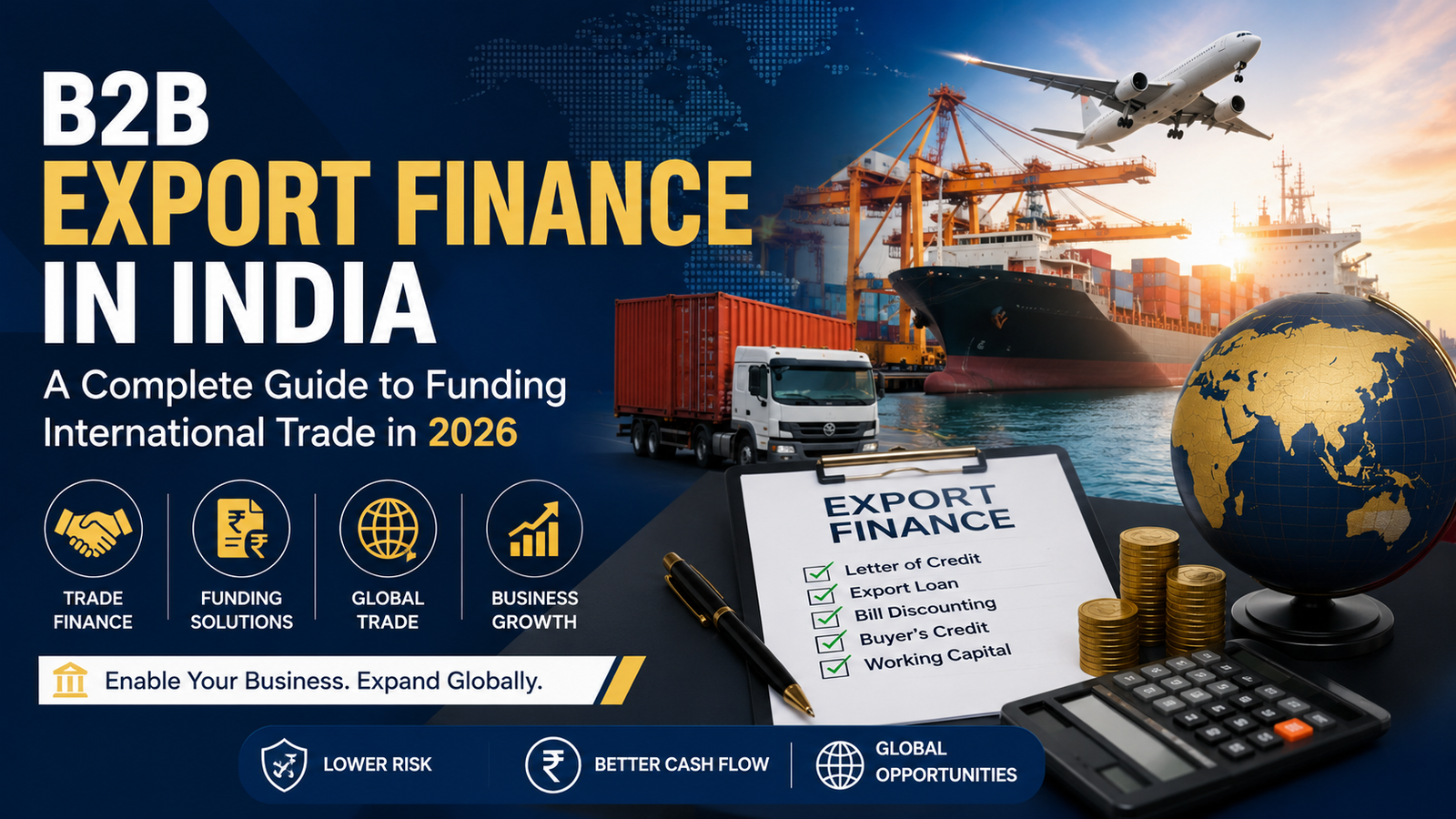
For Indian businesses, exporting products to international markets can open the door to significant growth. But getting an export order is only the beginning. Manufacturers and exporters often need money to purchase raw materials, manage production, pay suppliers, arrange shipping, and handle the gap between delivering goods and receiving payment from overseas buyers.
This is where B2B export finance in India becomes important. Export finance helps businesses maintain healthy cash flow while fulfilling international orders without putting excessive pressure on their working capital.
What Is B2B Export Finance?
B2B export finance refers to financial support provided to businesses involved in selling goods or services to overseas buyers. It can help exporters manage expenses before and after shipment.
For example, an exporter may receive a large international order but need funds to manufacture the products first. Instead of waiting for the buyer's payment, the business can use export finance in India to cover eligible business expenses and complete the order on time.
This makes export financing an important part of international trade finance.
Why Do Exporters Need Export Finance in 2026?
International trade often involves longer payment cycles than domestic business. An exporter may have to spend money weeks or months before receiving payment from a foreign customer.
Some common expenses include:
- Purchasing raw materials
- Manufacturing and packaging
- Paying workers and suppliers
- Transportation and logistics
- Shipping and freight charges
- Customs-related expenses
- Insurance and documentation costs
With suitable export working capital finance, businesses can manage these expenses more comfortably and accept larger orders without facing immediate cash-flow problems.
Types of Export Finance Available to Indian Businesses
Exporters can explore different financing options depending on their requirements and the stage of the export transaction.
1. Pre-Shipment Finance
Pre-shipment finance, also known as packing credit, provides working capital before goods are shipped. It can be used for activities such as purchasing raw materials, manufacturing, processing, packaging, and preparing goods for export.
This type of export working capital financing is particularly useful when an exporter has a confirmed order but needs funds to complete production.
2. Post-Shipment Finance
Post-shipment finance helps exporters manage the period between shipping goods and receiving payment from the overseas buyer.
Depending on the transaction, financing may be available against export documents, bills, or receivables. This can help businesses maintain cash flow instead of waiting for the international payment cycle to finish.
3. Invoice and Receivables Financing
Exporters selling on credit terms may have substantial money tied up in unpaid invoices. Export invoice financing can provide access to working capital against eligible receivables.
This can be useful for B2B exporters that regularly offer payment terms to international buyers.
Benefits of B2B Export Finance
The right financing solution can provide several advantages:
Better cash flow: Businesses can fund day-to-day export operations without depending entirely on existing cash reserves.
Larger order capacity: Access to working capital can make it easier to accept bigger international orders.
Timely production and delivery: Adequate funds help exporters purchase materials and meet production schedules.
Reduced payment-cycle pressure: Financing can bridge the gap between shipment and payment.
Business growth: Consistent access to finance can support expansion into new international markets.
How to Choose the Right Export Finance Option
Before applying for export finance for small businesses, exporters should evaluate the size and frequency of their orders, payment terms offered to buyers, production costs, repayment requirements, interest or financing costs, and documentation requirements.
It is also important to maintain proper export records, invoices, shipping documents, and financial statements. Comparing available financing options can help a business select a solution that matches its cash-flow cycle.
Final Thoughts
In 2026, access to working capital can play a major role in helping Indian businesses compete in international markets. B2B export finance in India gives exporters an opportunity to manage production costs, handle payment delays, and fulfill international orders more efficiently.
For manufacturers, suppliers, and trading companies looking to expand globally, understanding export finance, international trade finance, pre-shipment finance, post-shipment finance, and export working capital can be an important step toward building a financially stronger export business.
suggestion link
Call: +91 88264 00869
Website: Top Trade India
Email: info@toptradeindia.com
Follow us on: Instagram , Facebook , YouTube
Comments (0)
No comments yet. Be the first to comment!
Leave a Comment